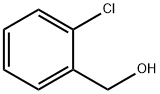
Major urinary metabolites of 2-chlorobenzyl alcohol in rats were 2-chlorohippuric acid, 2-chlorobenzyl cysteine, 2-chlorobenzoic acid and 2-chlorobenzyl glucuronic acid. It is a possible intermediate formed during the metabolism of 2-chloromandelic acid.
*The following content is generated by AI and is for reference only.
Overview
2-Chlorobenzyl alcohol (CAS: 50-19-7) is a key organic intermediate synthesized via chlorination of benzyl alcohol or direct chloromethylation. Its molecular formula is C₇H₇ClO, serving as a vital building block in pharmaceutical and agrochemical synthesis.
Application
- Pharmaceutical manufacturing for active ingredients like antibiotics.
- Agrochemical production of fungicides and herbicides.
- Synthetic dye and pigment industry intermediates.
- Flavor and fragrance formulation processes.
Precautions
Store in cool, dry, ventilated areas away from oxidizers. Use appropriate PPE including gloves and goggles to prevent skin irritation and inhalation risks during handling.







![Diethyl-2-acetamido-2-(7-chloro-5-(2-fluorophenyl)-3H- benzo[e][1,4]diazepin-2-yl)malonate](https://eimg.pharmasources.com/image/20240603/kCK1tVKXvO7mdpLTBNii5x61NUulXBiqHBf6clcn.png)


 (All Rights Reserved)