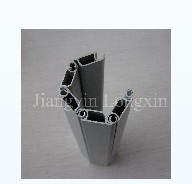
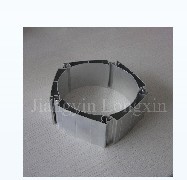
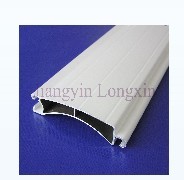
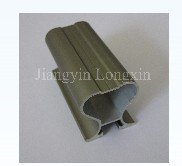
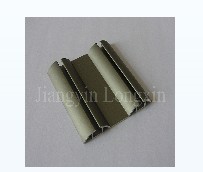
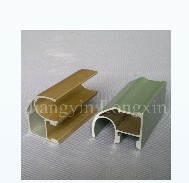
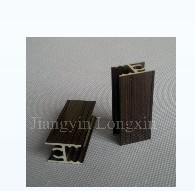
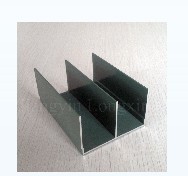
Product Description
please call me , to know more
AI Product Description
*The following content is generated by AI and is for reference only.
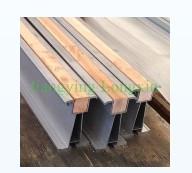
A **machined aluminum beam** is a structural or functional component created by removing material from a solid block (or billet) of aluminum alloy using CNC machines, lathes, mills, or other subtractive manufacturing processes. Unlike extruded beams, which are formed by forcing heated metal through a die to create a continuous profile, machined beams offer superior precision, complex geometries, and tighter tolerances.
Here is a detailed breakdown of their characteristics, applications, and advantages:
### 1. Key Characteristics
* **Material Selection**: Most commonly made from **6061-T6** or **7075-T6** aluminum alloys.
* *6061*: Excellent general-purpose strength, corrosion resistance, and weldability.
* *7075*: Higher strength-to-weight ratio, ideal for aerospace and high-stress applications, though harder to machine.
* **Precision**: Capable of holding extremely tight tolerances (often within ±0.001 inches or ±0.025 mm), which is difficult to achieve with standard extrusions.
* **Geometry**: Can feature complex internal channels, threaded holes, precise mounting surfaces, and custom cross-sections that would be impossible or too expensive to extrude.
* **Surface Finish**: The machining process can leave a specific surface finish (e.g., Ra values) directly off the tool, or it can be easily prepared for anodizing, painting, or powder coating.
### 2. Machined vs. Extruded Beams
| Feature | Machined Beam | Extruded Beam |
| :--- | :--- | :--- |
| **Production Method** | Subtractive (cutting away material) | Forming (pushing metal through a die) |
| **Tolerances** | Very High (High Precision) | Moderate (Standard Industrial) |
| **Complexity** | High (Internal features, threads) | Low (Simple profiles only) |
| **Lead Time** | Longer (Setup + machining time) | Shorter (Once die is made) |
| **Cost** | Higher per unit (labor/time intensive) | Lower per unit (economies of scale) |
| **Best For** | Prototypes, low volume, high precision | Mass production, long runs, standard shapes |
### 3. Common Applications
Because of their strength-to-weight ratio and precision, machined aluminum beams are critical in industries where reliability and exact fitment are paramount:
* **Aerospace & Defense**: Flight control linkages, sensor mounts, and drone frames where weight savings and vibration resistance are critical.
* **Robotics & Automation**: Linear guide rails, robotic arms, and gantry systems requiring zero-backlash movement and rigid structural support.
* **Medical Devices**: Surgical instrument frames, MRI components (non-magnetic), and imaging equipment housings.
* **Semiconductor Equipment**: Wafer handling stages and vacuum chamber components that require ultra-clean surfaces and thermal stability.
* **Optical Systems**: Lens mounts and telescope trusses needing precise alignment.
### 4. Design Considerations
If you are considering designing a machined aluminum beam, keep the following in mind:
* **Wall Thickness**: While aluminum is strong, very thin walls (<1-2mm) can warp during machining due to residual stresses unless properly clamped or stress-relieved.
* **Tool Access**: Internal features must be accessible by cutting tools; deep pockets may require specialized long-reach end mills.
* **Thermal Expansion**: Aluminum has a relatively high coefficient of thermal expansion. In precision assemblies, this must be accounted for if the beam will experience temperature fluctuations.
* **Fillet Radii**: Sharp internal corners should be avoided in design as they create stress concentrations and make tooling more difficult.
### Conclusion
Machined aluminum beams are the go-to solution when **precision, complexity, or low-volume production** outweighs the cost benefits of extrusion. They provide the rigidity of a structural beam with the accuracy of a machined part, making them indispensable in high-tech engineering sectors.
Are you looking for information on a specific alloy grade, a particular application, or perhaps help with a CAD design constraint?



 (All Rights Reserved)