The China Newsweek has recently reported on the infections of the "superbug"—Candida auris (C. auris) in China. According to Liao Wanqing, an academician of the Chinese Academy of Engineering and professor in the Dermatology Department of Changzheng Hospital, Second Military Medical University, "18 cases of clinical infection with the superbug have so far been confirmed in China." The infections of the superbug have been much concerned by the public due to the high fatality rate (more than 60%) thereof. The U.S. Centers for Disease Control and Prevention (CDC) has listed C. auris as an imminent threat, and the "superbug" control situations are also very severe in the UK, Japan, and India, etc. And as there is still no specific drug, more than 50% "superbug" infected people will die in 90 days. Such severe situations have raised very exigent requirements to the pharmaceutical practitioners.

I. About the "superbug"-C. auris
The scientific name of the "superbug" is C. auris which was first discovered in Japan in 2009 and has thereafter rapidly spread. Countries where the "superbug" has been reportedly separated and obtained include Canada and U.S. in North America, Colombia, Panama, and Venezuela in South America, Germany, France, Norway, Spain, UK, Switzerland, Russia, Belgium, and Austria in Europe, South Africa and Kenya in Africa, and India, Israel, Japan, Kuwait, Oman, Pakistan, South Korea, China, Malaysia, Saudi Arabia, and the United Arab Emirates in Asia. Wherein, Austria, Belgium, China, Malaysia, Norway, Russia, Switzerland, and the United Arab Emirates had all reported one case. This "superbug" has swept the globe.
In terms of the harm, C. auris can infect patients’ blood, lung, urethra, surface wound, and ear canal, etc. The external environmental factors that cause C. auris infections are similar to those that cause other pathogenic candida infections, with the risk factors including inserted catheters (urinary, central venous and arterial catheters), invasive medical procedures and equipment, use of breathing devices, long-term hospitalization, ICU (intensive care unit) patients, continuous treatment with broad-spectrum antifungals or antibiotics or treatment with immunosuppressants, and patients complicated with other diseases like diabetes and HIV. An understanding of the above is of some significance to the prevention of C. auris infection.
II. Drug susceptibility and resistance of the "superbug"
The medication standard of the minimum inhibitory concentration (MIC) of C. auris has still not been established. With reference to the medication standards of other candida, it turns out that almost all strains are highly resistant to fluconazole, more than half are resistant to voriconazole, 1/3 strains are resistant to amphotericin B (MIC≥2μg/mL), and a few strains are also resistant to echinocandins. Researchers have tested the susceptibility of 90 strains of C. auris to the common antifungals through the broth microdilution method recommended by the Clinical and Laboratory Standards Institute (CLSI), it turned out C. auris had high MIC90 values against fluconazole, amphotericin B, 5-fluorocytosine, and caspofungin, separately 64, 4, 8, and 1 μg/mL (Fig. I).

MIC参数 | MIC parameter |
MIC范围 | MIC range |
注:AMB,两性霉素B;ITC,伊曲康唑;VRC,伏立康唑;ISA,艾沙康唑;POS,泊沙康唑;FLU,氟康唑;5-FC,5-氟胞嘧啶;CAS,卡泊芬净;MFG,米卡芬净;AFG,阿尼芬净 | Note: AMB, amphotericin B; ITC, itraconazole; VRC, voriconazole; ISA, isavuconazole; POS, posaconazole; FLU, flucon... Read More

Related News
The “Superbug” that has Swept the Globe Bringing High Requirements to Pharmaceutical Practitioners
PharmaSources/Miling May 5, 2019 You may like
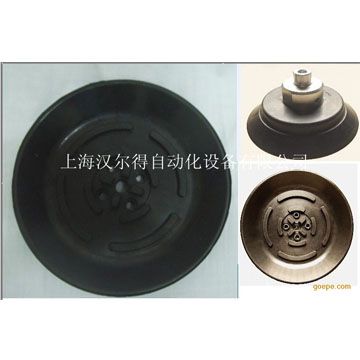
Supply nitrile rubber suction cup HFG-200 vacuum suction cup spreader high temperature suction cup
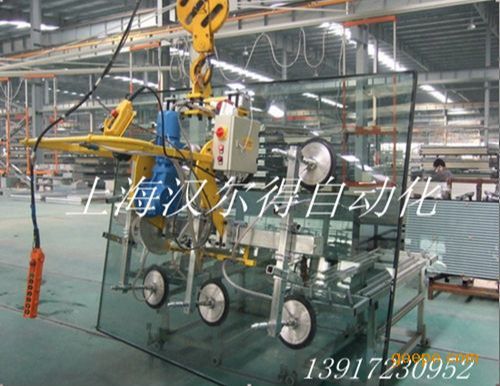
Tempered glass suction cup hanger, glass deep processing handling lifting suction cup, glass 90 degree flip suction crane
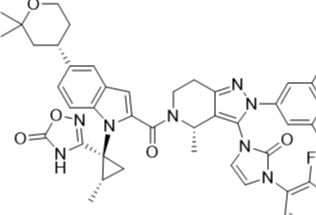
Orforglipron
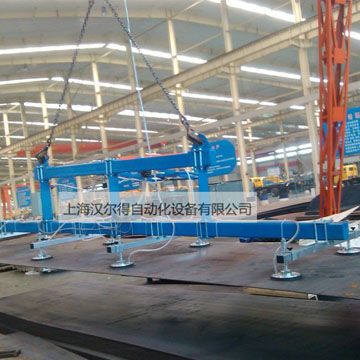
3 tons of aluminum plate vacuum suction cup hanger can set high quality plate suction cup hanger
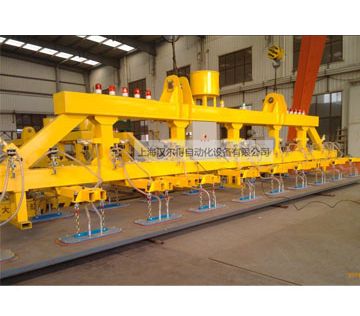
Vacuum suction cup hanger steel plate high temperature aluminum plate suction cup titanium plate and other metal plate suction cup under 30 tons
Get alerted on the PharmaSources E-Newsletter and Pharma Sources Insight E-Compilation! Subscribe
Note: You can unsubscribe from the alerts at any time. Get alerted on the PharmaSources E-Newsletter and Pharma Sources Insight E-Compilation! Subscribe
Note: You can unsubscribe from the alerts at any time. Pharma Sources Insight July 2025: GLOBAL APISOURCING TRENDS

READ ONLINE
DOWNLOAD
Pharma Sources Insight January 2025: What are Reshaping Pharma's Future?

READ ONLINE
DOWNLOAD
Pharma Sources Insight June 2024: Globalization on the Go

READ ONLINE
DOWNLOAD
Pharmaceutical Industry in 2024: Flexible Production, Innovative Drugs and Personalized Medicine

READ ONLINE
DOWNLOAD
PSI April 2023: Innovative Drugs Going Aroad

READ ONLINE
DOWNLOAD
PSI June 2022: New Developments, Greater Imapct

READ ONLINE
DOWNLOAD
PSI APRIL 2022: A Universal Vaccine Against All Variants

READ ONLINE
DOWNLOAD
PSI January 2021: Rolling Out the Vaccines

READ ONLINE
DOWNLOAD
PSI August 2020: The Great Journey or Recovery

READ ONLINE
DOWNLOAD
PSI December 2021: Quantum Revolution in Drug Discovery

READ ONLINE
DOWNLOAD
PSI August 2021: New Medtechs Shaping the Industry

READ ONLINE
DOWNLOAD
PSI April 2021: The Future of Immunotherapy

READ ONLINE
DOWNLOAD
PSI October 2020: Pharma Landscape in China

READ ONLINE
DOWNLOAD
PSI June 2020: A Post-pandemic Future

READ ONLINE
DOWNLOAD
Most popular
Apeloa Pharmaceutical releases first ESG
PharmaSources
May 12, 2025
Basic Concepts and Latest Trends in Radiation Biology: Emerging Insights and Future Directions
Sadia Ajmal
Sep 18, 2025
Methodology Validation in Chinese Pharmacopoeia 2025: How to Report Accuracy and Precision
Xing Xing
Sep 12, 2025
Digitalization in Procurement: From AI Forecasting to Blockchain Traceability
Saher Haider
Sep 19, 2025
Follow Us


Contact Us
About Us
Buy Service
Sell Service
Follow Us


Copyright 2006-2025
 (All Rights Reserved) (All Rights Reserved)Copyright 2006-2025
(All Rights Reserved) |